
What is Betting Tax in Uganda?
Betting tax is the levy that the Government of Uganda charges on betting companies’ income and punters’ payouts after wins. In Uganda, the taxation is guided by the Lotteries and Gaming Act 2016 and its subsequent amendments, including the Lotteries and Gaming (Amendment) Act, 2023.
The specific law provides the legal framework for the following reasons:
- Licensing betting companies
- Regulating gaming and betting activities in the country
- Collecting taxes from operators and the players
- Protecting players
The Ugandan government uses betting tax as both a revenue stream and a regulatory tool to control excessive gambling, though the latter part has not been enforced very well.
Why betting tax exist in Uganda
There are several reasons why Uganda enforces betting tax:
- Revenue generation – The government collects billions annually from the betting sector
- Regulation – Ensures only licensed operators are active
- Consumer protection – Helps monitor and control industry practices
- Social control – the tax discourages excessive betting, especially among youth and promotes responsible gambling
How betting tax works in Uganda
1. Tax on betting companies – Section 48(1) of the Lotteries and Gaming Act 2016 demands that all betting operators must pay tax based on the revenues that they collect in Uganda. The tax is calculated using this formula: Total stakes (money wagered) – payouts (winnings) = taxable revenue. Then a tax is applied based on the respective activities.
2. Tax collection process – Betting companies are responsible for calculating taxable revenue, filing monthly tax returns and paying taxes to URA. The process is largely automated today due to digital monitoring systems.
3. Role of technology in tax enforcement – Uganda has invested heavily in digital tracking systems to ensure compliance. These include mobile money monitoring systems, real-time transaction tracking and the integration with telecom networks. Since over 90% of betting transactions in Uganda happen via mobile money, this allows URA to track betting activity in real time.
4. The proposed centralized payment gateway – A major reform passed in 2025 under the Tax Procedures Code (Amendment) Act, 2025, introduced a centralized gaming payment system, licensing by the Bank of Uganda and direct monitoring by URA. This means that all deposits and withdrawals will go through one system, tax will be calculated automatically, and operators must integrate or face heavy penalties.
This is expected to significantly improve tax compliance and reduce underreporting.
Uganda betting tax rate on winnings and deposits
One of the most important questions for bettors is: What is the Uganda betting tax rate? So, let’s break it down clearly.
1. Tax on betting operators – in the amended schedule of the Lotteries and Gaming Act, the betting companies are levied 20% tax on sports betting revenue, while casino and gaming platforms pay 30% after being increased from 20% in the 2023 amendment.
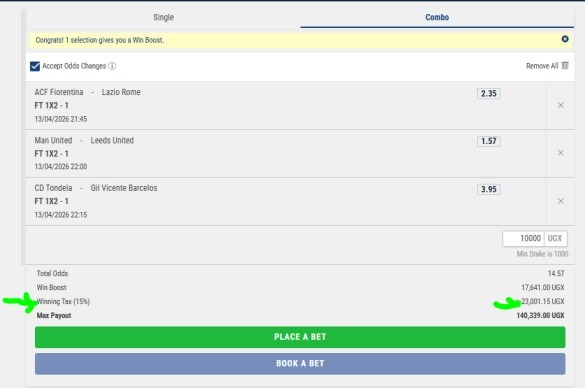
2. Tax on winners – Currently, Ugandan betting companies may deduct withholding tax before payouts and a 15% tax on player winnings. This means punters pay 15% on winnings.
3. Example of betting tax calculation – from the image below of a screenshot from a bet slip placed on Gals Sports betting, the stake is UGX 10,000 and potential winnings are UGX 3,198,956 after a 15% tax deduction of UGX 562,756. Note that these tax deductions are typically automatic.
4. Tax on deposits – Currently, there are no direct taxes on deposits in Uganda, but indirect costs may arise via transaction fees or system charges by your respective deposit method.
How betting tax affects your winnings
Betting tax has a direct impact on how much money you actually take home. These are ways taxation can affect you in betting.
1. Reduced net winnings – The most obvious effect is that your final payout is lower than your gross win. For example, if a bet wins UGX 50,000 and you pay a 15% tax of UGX 7,500, your final payout will be UGX 42,500.
2. Lower value bets – Taxes reduce the value of accumulator bets, jackpot wins and high-odds bets. This means you must be more strategic as you factor in that before pressing the bet. You may add a safer bet of small odds to negate the effect.
3. Impact on betting behaviour – here, taxes can discourage frequent betting, encourage smarter betting and reduce reckless gambling, which aligns with the government’s policy to control excessive betting.
4. Impact on bookmakers – High taxes also affect betting companies by lowering their profit margins, leading to reduced bonuses and promotions and a possible exit of some operators, as has been witnessed previously.
Tips for bettors in Uganda
To manage betting tax in Uganda, consider the following:
1. Always use licensed bookmakers because this ensures fair payouts, proper tax compliance and legal protection.
2. Understand your net winnings – Always calculate the expected payout after tax or check on your bet slip at the bottom.
3. Avoid excessive betting – Taxes reduce profits, so bet responsibly and focus on value bets.
4. Track your betting activity – always keep records of the stakes, your wins, and the deductions made.
FAQs
Do betting companies deduct tax automatically in Uganda?
Yes, betting companies automatically retain the tax and remit it to the Uganda Revenue Authority. The system deducts and gives a receipt to the bettors on their bet slip.
How much tax is charged on betting winnings in Uganda?
Bettors are taxed 15% of their winnings, while the betting companies pay 20% of their revenue as tax.
Is betting legal in Uganda?
Betting is legal and allowed in Uganda, but the operators must abide by the licensing requirements and allow regulatory oversight by the National Lotteries and Gaming Authority, as well as fulfil their tax obligations.
Their betting premises must be approved, and their online platforms must comply with regulations. Some of the restrictions include registering adults above 18 years and reporting any fraudulent betting activities and money laundering.